Cosmos Garden
The Experimental Station for Research on Art and Life is a collective project, started from the ground, literally, but based on years’ long relationships and institutional struggling. It brings together artists and other cultural workers, and an arts organisation that has been active in Romania since 2012. It is based on the history of a garden in Bucharest, Tranzit Garden, which existed for 7 years and shaped forms of communion, friendships and knowledge with and about nature. As in our former garden from the middle of the city, here, in the countryside, outside of the big city but not so remote from it, we set out to do things differently, to act in consistency with our words, to struggle against the instrumentalisation of nature for our purposes, even if it’s difficult, even if extractivism remains the dominant form of relation to a world we became estranged from.
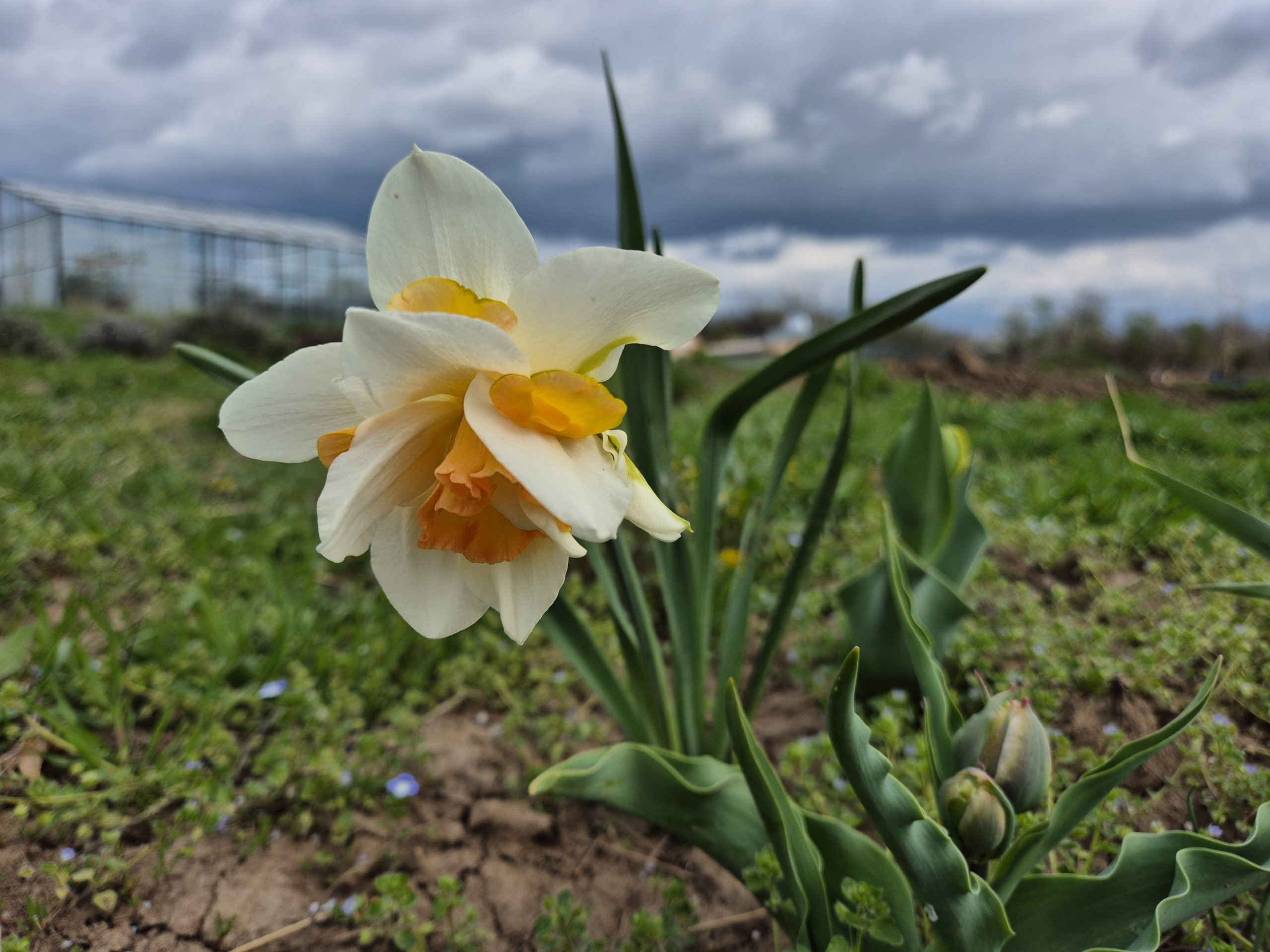
Another garden is taking shape here. One for long-term research, for understanding possibilities of adaptation to the challenges of climate disruptions and to the desertification of our region. We planted a mix of local and exotic species of plants, with some of the latter only recently adjusted to the climate in Bucharest (or rather, with the climate evolving that they are home much northern than they were used to). It is called Cosmos Garden[i] and it takes its name from Cosmos Bipinnatus, a flower originating from Mexico and which spread throughout all corners of the planet, taking local roots and names in each place, while remaining highly resilient in its cosmopolitanism and light way to travel. We are still searching for its indigenous name, before the one given by the Spanish priests, yet it is not an easy process. Colonialism extinguished not only peoples and languages, but also their memory.
What garden can you plant on a depleted soil, in a field that has lost the memory of its fertility, a soil so clayish that maybe it was never truly fertile without the help of the people, other than for the most resilient of trees?!
This becomes the task for Cosmos Garden, a garden of adaptation and biodiversity, where we can cultivate potatoes that have the memory of their pre-colonial origin, but which are strong enough that they can also feature in The Martian, where we can challenge our corn-dependent co-nationals with colored corn from Yucatan, where we preserve wheat to frame it into tableaux, surrounded by poems, where we grow tomatoes outside the safe space of greenhouses (the most frequent form of vernacular construction in the village), and watermelons on sand, like they do in the very south of the country, which is called Sahara of Romania. Cosmos Garden brings together the local willows and hazels, but hopes to preserve some of the Mediterranean dream, with figs and pomegranates and kiwis. It has ambitions of a botanical garden, here and there, but dares to think it can restore some of the memory of plants’ roles in the wider ecosystems. It is important for the Station not to be seen as an isolated initiative, and in this sense, Cosmos Garden is also a place for creating connections, for redesigning our own cartographies of proximities.
The garden is a place where we had an invasion of Helianthus tuberosus that nearly killed all the other plants, making us reflect on both the benefits of such a hardy plant and its history of saving people from several famine episodes, but also on the fragile equilibrium that is necessary for more than a dominant species to have a chance to the sunlight. Cosmos Garden is the main project of the Station, around which we build all the other infrastructures. It is the reason that determines us sometimes to rename the research Station as a survival Station: looking at the struggle of plants against a drought so strong that it created crevasses in the land, or at the plants which managed to stay alive over winter with their roots in frozen water, or at the variety of insects that appeared in the garden since we started planting it, despite its small scale.
Cosmos Garden should be a space for creating the possibilities of hope and investment into the existence of future, even when the very imagination of this is considered utopian and merely naïve. At best, the Garden will become a place for refuge and comfort, for providing food and conviviality, in coexistence with other species; at worst, it will adapt to survive without us, in a competition between topinamburs and wild-rose bushes. Either way, it will be a place that has attempted to support life.
[i] The initial plan of Cosmos Garden as a biodiversity garden trying at the same time to experiment with plants that have more chances to adapt to the dramatic climate changes was conceived by landscape designer Georgiana Strat, in 2022. In October 2022 we had the first collective planting session and since then a process started, of enriching the garden with other species and fighting for keeping alive those already planted.